
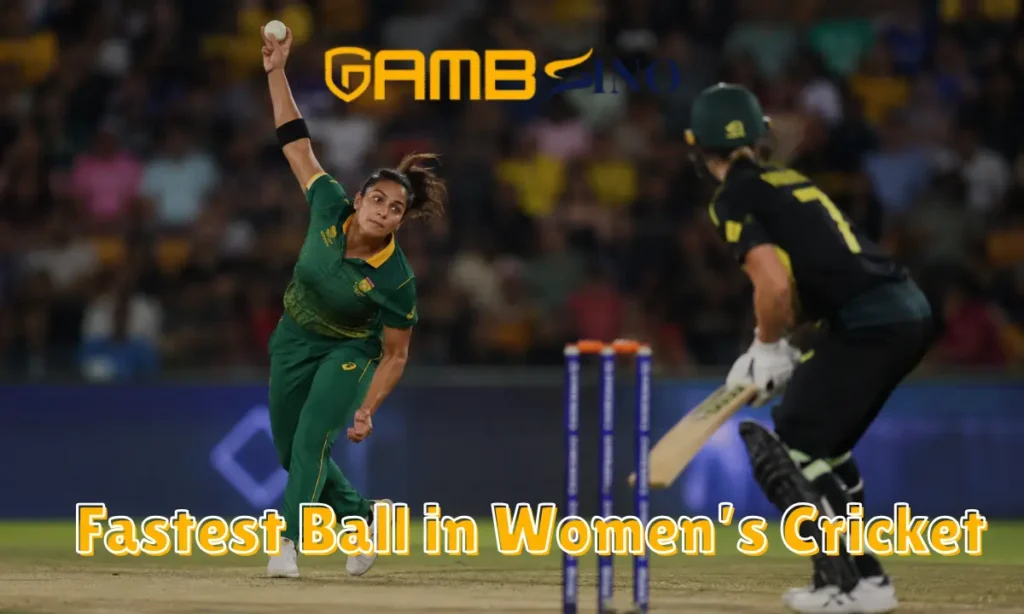
Women’s cricket has changed significantly over the years, and fast bowling has become one of the most exciting parts of the modern game. Earlier, women’s cricket had fewer professional opportunities, limited access to specialist coaching and less advanced technology for measuring bowling speed. Today, better fitness programmes, sports science, professional leagues and modern training methods have helped fast bowlers reach new levels of pace.
The biggest example of this development is Shabnim Ismail, the South African speedster who holds the widely recognised record for the fastest recorded ball in women’s cricket. Her incredible delivery of 132.1 km/h created history and established a new benchmark for women fast bowlers around the world.
Fastest Ball in Women’s Cricket at a Glance
| Record | Details |
|---|---|
| Fastest Bowler | Shabnim Ismail |
| Country | South Africa |
| Fastest Recorded Speed | 132.1 km/h |
| Speed in mph | Approximately 82.08 mph |
| Tournament | Women’s Premier League |
| Year | 2024 |
| Match | Mumbai Indians vs Delhi Capitals |
| Batter Facing the Delivery | Meg Lanning |
| Record Status | Fastest Recorded Ball in Women’s Cricket |
Who Bowled the Fastest Ball in Women’s Cricket?
The fastest recorded ball in women’s cricket was bowled by Shabnim Ismail. The South African fast bowler reached a remarkable speed of 132.1 km/h, approximately 82.08 mph, while representing Mumbai Indians against Delhi Capitals in the Women’s Premier League on 5 March 2024.
The record-breaking delivery was bowled to Australian cricket legend and Delhi Capitals captain Meg Lanning. The ball crossed the 130 km/h mark, making it one of the most important pace-bowling moments in the history of women’s cricket. Shabnim Ismail had already earned a reputation as one of the fastest bowlers in the women’s game, but this delivery took her achievement to an entirely new level.
Shabnim Ismail’s Record-Breaking 132.1 km/h Delivery
Shabnim Ismail’s historic record was the result of years of fast bowling at the highest level. Throughout her career, pace has been her greatest weapon. Her aggressive run-up, powerful bowling action and ability to consistently generate speed have made her a difficult bowler for even the most experienced batters.
The record was created during the WPL match between Mumbai Indians and Delhi Capitals. Ismail bowled an extremely quick delivery to Meg Lanning during her spell. The ball struck Lanning on the front pad after she missed it, and Mumbai Indians appealed for LBW. Although the appeal was not successful, the delivery immediately became the highlight of the match because of its extraordinary speed.
The ball was officially recognised at 132.1 km/h, making Shabnim Ismail the fastest recorded bowler in women’s cricket history.
The Initial 138.3 km/h Speed Reading
The record-breaking delivery also created discussion because the speed initially displayed during the live broadcast was higher. The screen first showed 138.3 km/h, but the recognised speed was later corrected to 132.1 km/h.
This situation highlighted how cricket speed measurements can sometimes vary depending on the technology and tracking system being used. The point at which the speed is measured and the method used to calculate the final figure can also affect the displayed result.
For this reason, 132.1 km/h is considered the widely accepted speed for Shabnim Ismail’s record-breaking delivery and remains the recognised benchmark in women’s cricket.
Fastest Ball in Women’s International Cricket
There is an important difference between the fastest ball in women’s cricket overall and the fastest delivery in women’s international cricket. Shabnim Ismail’s record-breaking 132.1 km/h delivery was achieved in the Women’s Premier League, which is a franchise tournament rather than an international match.
However, Ismail is also widely associated with the fastest recorded delivery in women’s international cricket. She was clocked at approximately 128 km/h against West Indies in 2016. She later demonstrated her pace again by reaching around 127 km/h twice during the 2022 Women’s Cricket World Cup.
These performances showed that Ismail’s exceptional pace was not limited to one match or one competition. She repeatedly produced high-speed deliveries during her international career.
Fastest Women’s Cricket Records
| Category | Bowler | Speed |
|---|---|---|
| Fastest Recorded Ball in Women’s Cricket | Shabnim Ismail | 132.1 km/h |
| Widely Recognised Fastest Women’s International Delivery | Shabnim Ismail | 128 km/h |
| Another Major Recorded Pace Mark | Shabnim Ismail | 127 km/h |
Top Fastest Women Bowlers in Cricket History
Comparing the fastest women bowlers from different generations is not always easy. Modern cricket uses advanced technology to measure bowling speed, but earlier generations often played without reliable speed-tracking systems. As a result, some legendary fast bowlers may never have had their fastest deliveries officially recorded.
Despite this challenge, several players are regularly recognised as some of the quickest bowlers in the history of women’s cricket.
Shabnim Ismail – South Africa
Shabnim Ismail is the modern benchmark for pace in women’s cricket. Her record of 132.1 km/h remains the highest widely recognised recorded speed in the women’s game. What makes her achievement even more impressive is that she had already produced several exceptionally fast deliveries during her international career.
Her bowling was based on more than just raw speed. Ismail could attack batters with fast yorkers, aggressive short balls and an intimidating approach. She had the ability to maintain high pace throughout her spell and was capable of producing a quick delivery even during pressure situations.
Her record has made her one of the most important names in the history of women’s fast bowling.
Cathryn Fitzpatrick – Australia
Cathryn Fitzpatrick is widely remembered as one of the fastest bowlers of her generation. She played during a period when women’s cricket did not have the same technology or professional infrastructure available today, which makes exact comparisons with modern speed records difficult.
Although different reports provide different figures regarding her fastest delivery, Fitzpatrick’s reputation as a genuinely quick bowler is unquestioned. She used pace, bounce and an aggressive approach to trouble some of the best batters in international cricket.
Her contribution was particularly important because she helped establish fast bowling as a major attacking weapon in women’s cricket.
Ellyse Perry – Australia
Ellyse Perry is recognised as one of the greatest all-rounders in women’s cricket, but fast bowling was also a major part of her game, especially during the earlier years of her career.
Perry combined athletic ability with a smooth and efficient bowling action. She could generate good pace while also using swing and seam movement to challenge batters. Over time, she developed into a complete bowler capable of adapting her style to different formats and match situations.
Her career demonstrates that successful fast bowling is not only about producing the highest speed. Accuracy, movement, control and tactical awareness are equally important.
Tayla Vlaeminck – Australia
Tayla Vlaeminck is known as one of the naturally quickest bowlers of the modern generation. Her ability to generate serious pace has made her an exciting player whenever she has been available for Australia.
She represents a new era of women fast bowlers who have access to professional fitness programmes, specialist coaching and advanced sports science. Her career has also highlighted the importance of injury management because fast bowling places enormous pressure on the body.
When fully fit, Vlaeminck has the pace and potential to remain one of the fastest bowlers in women’s cricket.
Darcie Brown – Australia
Darcie Brown is another exciting name in modern women’s fast bowling. She gained attention because of her natural pace, athletic bowling action and aggressive style.
Brown developed in a professional cricket environment that allowed her to focus on fitness, technique and skill development from an early stage. Her rise represents the growing importance of specialist pace bowling in women’s cricket.
With continued development, she has the potential to challenge even higher speed levels in the future.
Jhulan Goswami – India
Jhulan Goswami is one of the greatest fast bowlers India has ever produced and one of the most influential figures in women’s cricket.
Her height, ability to generate bounce and consistent line and length made her a difficult bowler to face. She enjoyed a long and successful international career and became a role model for young cricketers, particularly aspiring fast bowlers in India.
Jhulan Goswami’s influence cannot be measured only through speed. She proved that an Indian fast bowler could lead an international attack and consistently compete against the best teams in the world.
Katherine Sciver-Brunt – England
Katherine Sciver-Brunt built her reputation on aggression, intensity and competitiveness. She combined useful pace with excellent control and became one of England’s most successful fast bowlers.
Her bowling showed that raw speed alone does not define a great fast bowler. The ability to maintain pressure, hit consistent areas and perform in important matches can be equally valuable.
Her competitive mindset made her one of the toughest bowlers of her generation.
Lea Tahuhu – New Zealand
Lea Tahuhu has been an important pace bowler for New Zealand. She is known for her ability to hit the pitch hard and extract bounce, particularly on surfaces that support fast bowling.
Her presence in the New Zealand attack reflects the growing number of specialist pace bowlers in modern women’s cricket. She has used her speed and bounce to challenge batters across different formats.
Lauren Filer – England
Lauren Filer is one of the exciting fast bowlers from the newer generation of women’s cricket. She has attracted attention because of her aggressive approach and ability to generate genuine pace.
Her development is particularly interesting because she represents the next group of bowlers who are growing up with access to professional coaching and advanced fitness programmes. With further experience, she could become one of the players capable of challenging the highest speed records in women’s cricket.
How Fast Is 132.1 km/h?
Shabnim Ismail’s record-breaking speed of 132.1 km/h can also be understood using different measurements. The delivery was approximately 82.08 miles per hour, while in metres per second, the ball travelled at around 36.7 metres per second.
| Measurement | Speed |
|---|---|
| Kilometres per Hour | 132.1 km/h |
| Miles per Hour | Approximately 82.08 mph |
| Metres per Second | Approximately 36.7 m/s |
At this pace, a batter has very little time to judge the line and length of the delivery. The challenge becomes even greater when the bowler combines speed with swing, seam movement or extra bounce.
Why Women’s Fast Bowling Is Getting Faster
The increasing speed of women fast bowlers is closely connected to the professional development of the sport. Players now have access to better facilities and can spend more time focusing on fitness, skill development and recovery.
Modern fast bowlers often work with specialist coaches, strength trainers, physiotherapists and performance analysts. This professional support helps them develop the physical and technical qualities required for fast bowling.
Better Strength and Conditioning
Fast bowling requires explosive power and full-body coordination. Modern training programmes focus on improving leg strength, core stability, sprinting ability and overall athleticism.
A bowler generates energy during the run-up and transfers that energy through the legs, hips, torso and bowling arm before releasing the ball. Improving physical strength and movement efficiency can help increase pace.
Advanced Bowling Coaching
Modern technology allows coaches to analyse bowling actions in great detail. Video analysis can help players improve their run-up, front-foot landing, body rotation, arm speed and release point.
Small technical improvements can make the bowling action more efficient. This can help a player generate additional pace while reducing unnecessary stress on the body.
Growth of Professional Leagues
Professional leagues have played an important role in the development of women’s cricket. Players now compete more regularly in high-pressure environments and share dressing rooms with experienced international stars.
The Women’s Premier League is a strong example of this development. It has created a major platform for women cricketers and has also provided opportunities for young players to learn from some of the best fast bowlers and coaches in the world.
Interestingly, Shabnim Ismail’s record-breaking delivery was itself produced on the WPL stage.
Better Sports Science and Recovery
Fast bowling places enormous stress on the body. Modern cricket teams now place greater emphasis on workload management, injury prevention and recovery.
The lower back, knees, ankles, hips and shoulders all experience pressure during the fast-bowling action. Better fitness planning and recovery programmes can help players remain healthy and maintain their pace over a longer period.
How Is Bowling Speed Measured?
Bowling speed is measured using specialised technology that tracks how quickly the cricket ball travels after leaving the bowler’s hand.
The final speed reading can depend on the technology and measurement method being used. Factors such as calibration, tracking systems and the point of measurement can sometimes produce small differences in the recorded figures.
This is one of the reasons why speed records from older eras are difficult to compare directly with modern records. Today’s cricket matches generally have more advanced and consistent tracking systems.
Why Historical Speed Records Are Difficult to Compare
Not every legendary fast bowler has an official record of her highest speed. In earlier decades, speed guns and advanced ball-tracking systems were not available in every match.
This means a bowler may have been exceptionally fast without ever having her fastest delivery officially measured.
Therefore, modern lists should distinguish between officially recorded speeds and reported or estimated figures. A bowler from an earlier generation should not automatically be considered slower simply because there is no official speed record available.
This makes Shabnim Ismail’s 132.1 km/h achievement especially significant because it is based on modern recorded match data.
Fastest Ball in Women’s Cricket vs Men’s Cricket
Men’s cricket has traditionally produced higher peak bowling speeds, but women’s fast bowling has made major progress over the years.
A delivery travelling at 132.1 km/h is genuinely quick and gives the batter very little reaction time. More importantly, the number of women bowlers capable of producing serious pace is increasing.
The key development is not simply the comparison between men’s and women’s records. The more interesting story is how rapidly women’s fast bowling itself has improved through better training, professional opportunities and specialist coaching.
Can Shabnim Ismail’s 132.1 km/h Record Be Broken?
There is a strong possibility that the record will eventually be broken. As women’s cricket continues to become more professional, young players will receive access to advanced coaching and physical training from an earlier age.
A future record-breaking bowler will likely need a combination of natural pace, explosive strength, efficient bowling mechanics, a powerful run-up and proper workload management.
The next major milestone could be another woman fast bowler regularly crossing 130 km/h. In the future, it may even be possible to see someone challenge the 135 km/h mark.
For now, however, Shabnim Ismail’s 132.1 km/h delivery remains the standard that every future pace bowler will attempt to chase.
Shabnim Ismail’s Legacy in Women’s Fast Bowling
Shabnim Ismail’s contribution to women’s cricket goes far beyond a single record. Throughout her career, she built a reputation as a genuinely quick and aggressive fast bowler.
Her ability to consistently bowl at high speeds made her one of the most challenging opponents in international cricket. The 132.1 km/h delivery became a symbol of how much women’s fast bowling has evolved.
It also created an exciting challenge for future generations. Every young fast bowler with ambitions of becoming the quickest in the world now has a clear target to chase.
Key Facts About the Fastest Ball in Women’s Cricket
- Shabnim Ismail holds the record for the fastest recorded ball in women’s cricket.
- Her record-breaking delivery was clocked at 132.1 km/h.
- The ball was bowled while playing for Mumbai Indians.
- The record was set during the Women’s Premier League 2024.
- Mumbai Indians were playing against Delhi Capitals.
- The delivery was bowled to Meg Lanning.
- Shabnim Ismail is also widely associated with the fastest recorded delivery in women’s international cricket at approximately 128 km/h.
- The 132.1 km/h delivery crossed the important 130 km/h barrier.
- Historical speed comparisons are difficult because older matches often did not have modern speed-tracking technology.
- Better fitness, professional leagues and advanced coaching are helping women fast bowlers become quicker.
Conclusion
The record for the fastest ball in women’s cricket represents one of the biggest milestones in the evolution of the women’s game. Shabnim Ismail’s incredible 132.1 km/h delivery demonstrated that women fast bowlers are reaching new levels of pace and athletic performance.
Her record-breaking moment in the Women’s Premier League was not only a personal achievement but also an important moment for women’s cricket. Earlier generations, including legendary fast bowlers such as Cathryn Fitzpatrick and Jhulan Goswami, helped build the foundation for the modern pace attack.
Today, players such as Shabnim Ismail, Darcie Brown, Tayla Vlaeminck and Lauren Filer represent the continuing evolution of women’s fast bowling. With professional cricket growing rapidly and young players receiving better training than ever before, the current record may eventually be broken.
Until then, Shabnim Ismail’s 132.1 km/h delivery remains the fastest widely recognised recorded ball in women’s cricket history.
Frequently Asked Questions
Who bowled the fastest ball in women’s cricket?
Shabnim Ismail of South Africa bowled the fastest widely recognised recorded delivery in women’s cricket, reaching a speed of 132.1 km/h.
What is the speed of the fastest ball in women’s cricket?
The fastest recorded ball in women’s cricket was clocked at 132.1 km/h, which is approximately 82.08 mph.
When did Shabnim Ismail bowl the fastest ball?
Shabnim Ismail bowled the record-breaking delivery on 5 March 2024 during the Women’s Premier League match between Mumbai Indians and Delhi Capitals.
Who was batting when Shabnim Ismail bowled the 132.1 km/h delivery?
The record-breaking delivery was bowled to Meg Lanning, who was representing Delhi Capitals in the match.
What is the fastest ball in women’s international cricket?
Shabnim Ismail is widely associated with the fastest recorded delivery in women’s international cricket, clocked at approximately 128 km/h against West Indies in 2016.
Can Shabnim Ismail’s 132.1 km/h record be broken?
Yes, the record can be broken in the future. With better fitness training, professional leagues, advanced coaching and sports science, young women fast bowlers may eventually bowl faster than 132.1 km/h.
Who are some of the fastest women bowlers in cricket?
Some of the fastest and most recognised women fast bowlers include Shabnim Ismail, Cathryn Fitzpatrick, Ellyse Perry, Jhulan Goswami, Tayla Vlaeminck, Darcie Brown, Lea Tahuhu and Lauren Filer.
Also, Read About: