The half hour that used to belong to the television
Ten years ago, most Indian households had a fixed evening rhythm. Dinner, then the television, then whatever the family agreed to watch. That half hour after dinner belonged to a single screen, usually controlled by whoever held onto the remote the longest. That routine has mostly disappeared, replaced by something messier and far more personal: five people in the same living room, each staring at a different app on a different phone.
This isn’t a small shift. It’s a complete reordering of how attention gets spent at home, and it happened quietly enough that most people never noticed the exact moment it happened.
What actually changed
Three things converged, roughly over the same decade.
- Data got cheap enough that streaming a video no longer felt like a decision that needed justifying.
- Screens got bigger and sharper, so a phone stopped feeling like a compromise compared to a television.
- App stores filled up with genuinely well-made regional content, not just translated versions of foreign products.
The result is that the phone became the default device for entertainment, and the television turned into the fallback for when a group specifically wants to watch the same thing together.
Fragmentation is the new normal
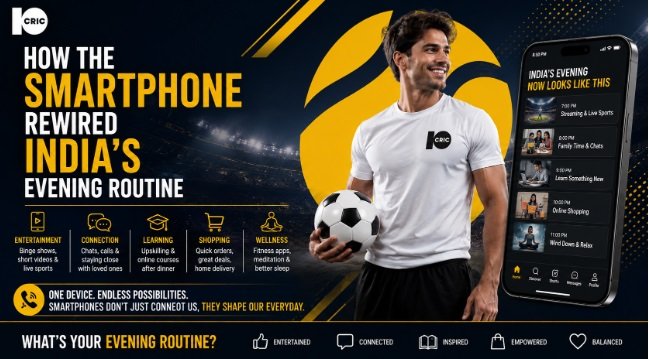
Walk into any middle-class Indian home at 9pm and you’ll likely see this: one person watching a web series with earphones in, another scrolling short-form video, someone else on a video call with a cousin abroad, and maybe one person still on the sofa with the television for cricket highlights or a news bulletin. Nobody thinks this is strange anymore. It’s just how evenings work now.
This fragmentation has a side effect worth noting. Because each person curates their own feed, the shared cultural references that used to come from watching the same shows have thinned out. Families sometimes have to actively describe what they watched to each other, the way you’d tell someone about a book they haven’t read. That’s a genuine change in how households communicate, not just a technology footnote. Today, this experience is also shaped by the rise of Android App and IOS App platforms, which make it easier for each family member to access personalized entertainment and content on their own device.
Sports viewing moved first, and moved fastest
If there’s one category where the phone completely displaced the television, it’s live sport outside of marquee cricket matches. Domestic leagues, second-tier football, international tennis at odd hours, all of it now gets watched on a phone propped against a water bottle at the dinner table, because that’s where the stream is available and the television package isn’t.
Around this same shift, a whole ecosystem of companion apps grew up alongside the streaming apps: score trackers, fan discussion apps, and for adults who follow the betting side of sport, wagering apps that run alongside the live coverage rather than replacing it. For readers curious about that corner of the mobile entertainment world, the 10cric app is one of the more commonly downloaded examples in that category, aimed at adults who already follow sport closely and want the odds and the match on the same device. Anyone exploring that space should treat it strictly as entertainment for over-18s, set a firm budget before opening the app, and remember that betting outcomes are never guaranteed, whatever a highlight reel might suggest.
The attention economy inside one household
What’s interesting is how this plays out across generations. Parents who grew up with one television and three channels often still default to longer-form content, a full episode, a full match. Their kids, raised entirely on feeds, treat fifteen seconds as a complete unit of entertainment and will happily get through forty of them in the time it takes to finish one episode.
Neither habit is wrong, but they don’t mix well in the same room, which is partly why the single shared screen lost its grip on the household. Once everyone had a device that could serve their own attention span, there was no reason to fight over the remote anymore. For those who want to stay connected with updates and discussions, Join Telegram channels can offer another convenient way to follow content on the go.
What hasn’t changed
A few things have stayed remarkably stable through all of this.
- Big cricket matches, especially India games, still pull people back to a shared screen. The television, or at least a shared large display, still wins for events that feel communal.
- Regional language content still travels through word of mouth and family recommendation more than algorithmic discovery.
- Evening entertainment is still mostly a wind-down activity, not a productivity one. People aren’t multitasking work and entertainment on the same device nearly as much as assumed; the phone at 9pm is doing one job.
A practical note for anyone managing a shared household plan
If your home is now running four or five separate entertainment habits on one data plan, it’s worth actually checking usage rather than guessing. Streaming video eats data far faster than short-form scrolling, and a single household member bingeing a series in HD can quietly account for most of a monthly allowance. Most carrier apps now show a per-day breakdown, and it’s a useful five-minute check before the next recharge rather than after a bill shock.
The living room television isn’t gone, and it probably won’t disappear entirely. But it has been demoted, from the default device to the special-occasion one, while every phone in the house has quietly taken over the job it used to do alone—including keeping us updated with the latest cricket news.