
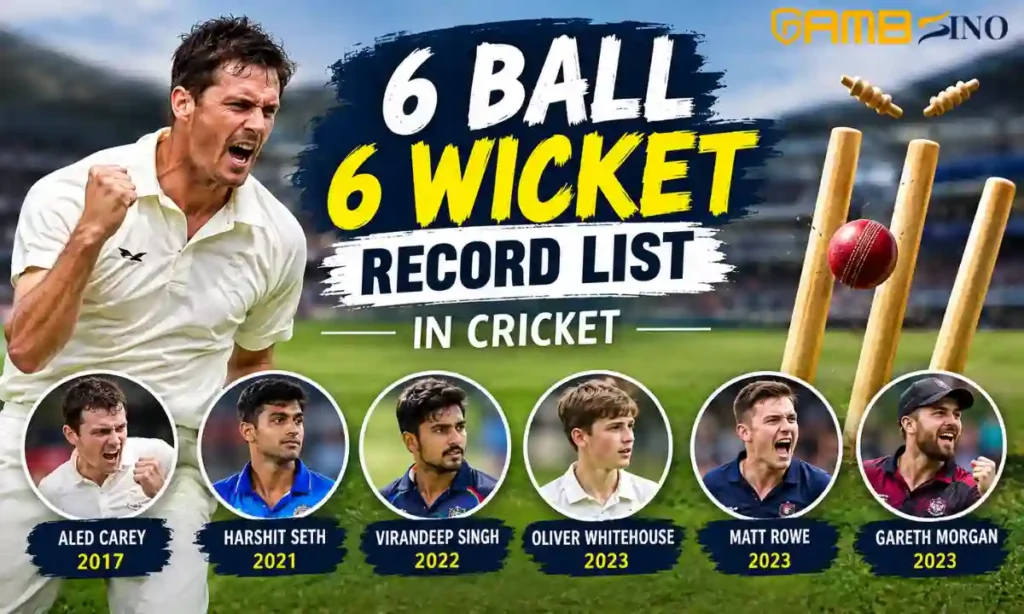
Taking a wicket is one of the biggest achievements for a bowler, but taking six wickets with six consecutive legal deliveries is an extremely rare event in cricket. It means the bowler dismisses a batter on every ball of a complete over. This remarkable achievement is even more difficult than a hat-trick because there is no room for a single dot ball or scoring delivery between the wickets. Several bowlers have been associated with six wickets in six balls or six consecutive dismissals at different levels of cricket. However, not every performance has exactly the same statistical definition. Some happened in club or school cricket, while some involved a run-out or wickets spread across more than one over.
Bowlers in Cricket History Who Took 6 Ball 6 Wicket Record List
The following table includes the major names associated with the six-ball, six-wicket record in cricket.
| No. | Bowler | Year | Country | Level of Cricket | Record |
|---|---|---|---|---|---|
| 1 | Aled Carey | 2017 | Australia | Club Cricket | Six wickets in six balls |
| 2 | Harshit Seth | 2021 | UAE | Under-19 Cricket | Six consecutive dismissals |
| 3 | Virandeep Singh | 2022 | Malaysia | Club/T20 Cricket | Six wickets fell in six balls |
| 4 | Oliver Whitehouse | 2023 | England | Junior Cricket | Six wickets in one over |
| 5 | Matt Rowe | 2023 | New Zealand | School Cricket | Six wickets in six balls |
| 6 | Gareth Morgan | 2023 | Australia | Club Cricket | Six wickets in six balls |
6 Ball 6 Wicket Record List in Cricket
1. Aled Carey (2017)

Aled Carey is one of the most famous names connected with the six-ball, six-wicket record. He produced this extraordinary bowling performance while playing club cricket in Australia in January 2017. Carey was representing Golden Point Cricket Club against East Ballarat Cricket Club in a Ballarat Cricket Association match. During one remarkable over, he dismissed a batter with every legal delivery.
His first three deliveries produced three wickets, giving him a hat-trick. Instead of stopping there, Carey continued his incredible spell and took three more wickets from the next three balls. The six dismissals included catches, an LBW and bowled dismissals. By the end of the over, six batters had been dismissed from six consecutive legal deliveries. The batting side eventually collapsed, and Carey’s performance became one of the most remarkable bowling feats in cricket history.
2. Harshit Seth (2021)
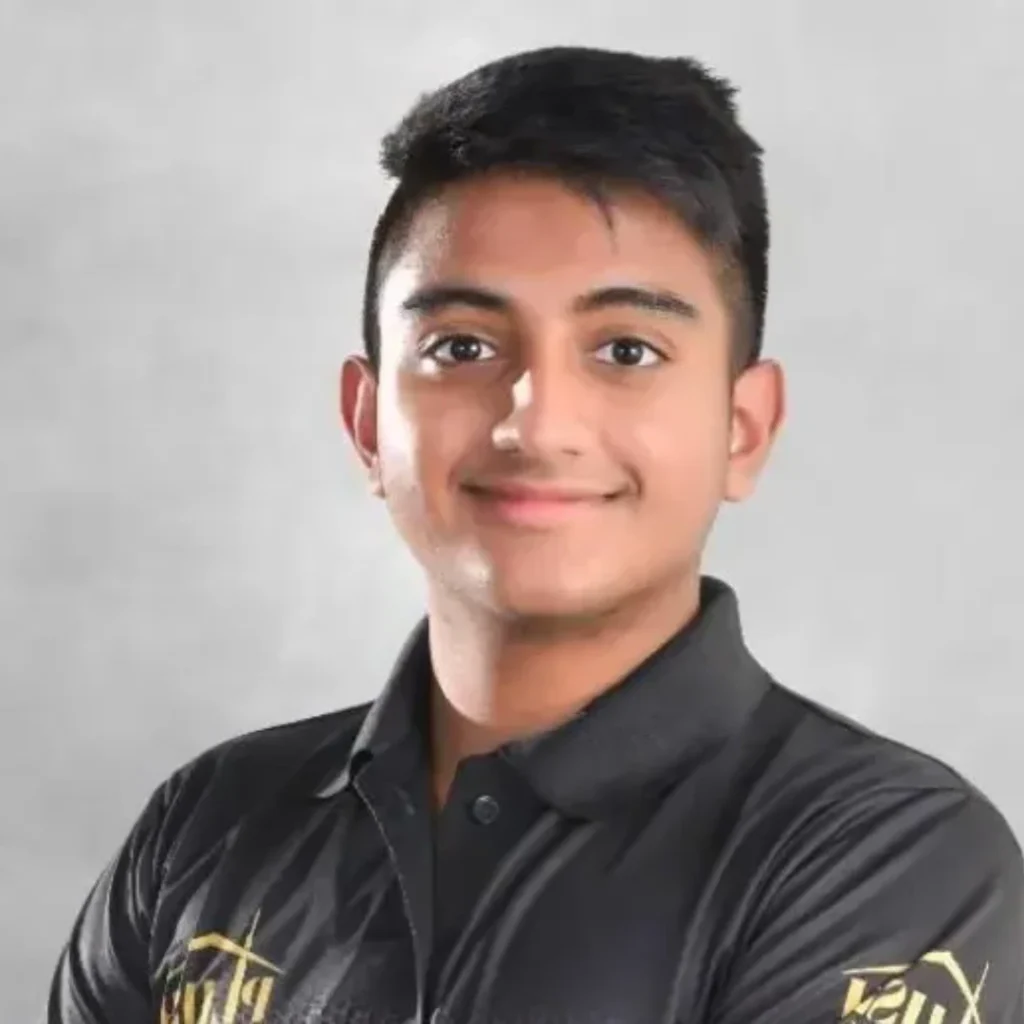
Harshit Seth is another bowler whose name appears in discussions about six consecutive wickets. He produced an extraordinary bowling performance during an Under-19 tournament in the United Arab Emirates in 2021. Seth was playing for DCC Starlets in a match against Hyderabad Hawks Academy. His bowling spell created a huge collapse in the opposition batting lineup.
He took six consecutive wickets during his spell and eventually finished with eight wickets for only four runs. His figures showed how destructive his bowling was throughout the innings. There is, however, an important difference between Seth’s achievement and a genuine six-wicket over. His six consecutive dismissals did not all come from the same six-ball over. For this reason, his performance is better described as six consecutive wickets rather than six wickets from six balls in one over.
3. Virandeep Singh (2022)

Virandeep Singh produced another remarkable six-wicket sequence during a cricket match in Nepal in 2022. The Malaysian all-rounder was playing for Malaysia Club XI against Push Sports Delhi in the Nepal Pro Club Championship. The opposition was approaching the end of its innings when the dramatic collapse happened. Six wickets fell from six consecutive deliveries during the final over. This created one of the most unusual finishes seen in the tournament.
However, Virandeep was officially credited with five wickets because one of the six dismissals was a run-out. He finished the innings with bowling figures of five wickets for nine runs. Therefore, the event is often included in lists of six wickets in six balls, but technically it was not six wickets credited to the bowler himself. The performance was still extraordinary because six batters were dismissed during six consecutive deliveries.
4. Oliver Whitehouse (2023)

Oliver Whitehouse created headlines in junior cricket after producing a remarkable six-wicket over at a very young age. Whitehouse was only 12 years old when he represented Bromsgrove Cricket Club against Cookhill. During an extraordinary over, he dismissed six batters with six consecutive deliveries. His performance was particularly impressive because six wickets in six balls is extremely difficult even for experienced senior bowlers.
Whitehouse did not stop after completing the six-wicket over. He continued his bowling spell and took additional wickets in his following over. His overall performance made the young cricketer one of the most talked-about junior bowlers associated with this rare record. The feat also demonstrates that extraordinary bowling performances can happen at school and junior levels, where unusual match situations can sometimes create opportunities for a bowler to take several wickets in quick succession.
5. Matt Rowe (2023)

Matt Rowe produced one of the clearest examples of six wickets in six balls in school cricket. He was playing for Palmerston North Boys’ High School against Rotorua Boys’ High School in New Zealand. During the match, Rowe delivered an extraordinary fifth over. Every one of his six legal deliveries resulted in a wicket. His sequence included catches, bowled dismissals and an LBW.
Taking six wickets in a single over completely changed the momentum of the match. It was an exceptional display of accuracy, movement and pressure bowling. Rowe eventually finished the match with nine wickets for only 12 runs from six overs. His performance is especially notable because the six wickets came directly from six deliveries in the same over, making it one of the strongest examples of the six-ball, six-wicket achievement.
6. Gareth Morgan (2023)

Gareth Morgan produced one of the most dramatic six-wicket overs in club cricket in 2023. Morgan was playing for Mudgeeraba Nerang & Districts Cricket Club against Surfers Paradise in a Gold Coast Premier League Division 3 match. The situation was extremely difficult for his team. Surfers Paradise needed only five runs to win and still had six wickets remaining. Morgan took responsibility by bowling the final over himself.
What followed was an extraordinary sequence. Morgan dismissed the batter with each of the six legal deliveries. The first four wickets came through catches, while the final two batters were bowled. The opposition went from a strong position to being completely bowled out in just six deliveries. Mudgeeraba Nerang & Districts won the match by four runs. Morgan finished the match with seven wickets for 16 runs, making the final over one of the most memorable finishes in club cricket.
Quick Comparison of 6 Ball 6 Wicket Records
| Bowler | Year | Six Wickets in One Over | Important Detail |
|---|---|---|---|
| Aled Carey | 2017 | Yes | Six wickets from six legal deliveries |
| Harshit Seth | 2021 | No | Six consecutive dismissals across his spell |
| Virandeep Singh | 2022 | Not technically | One of the six dismissals was a run-out |
| Oliver Whitehouse | 2023 | Yes | Remarkable junior cricket performance |
| Matt Rowe | 2023 | Yes | Six wickets in one over |
| Gareth Morgan | 2023 | Yes | Six wickets in the final over |
This comparison shows why different versions of the record can sometimes appear online. The phrase “six wickets in six balls” can refer either to six wickets falling from six deliveries or to six wickets actually being credited to the bowler.
Why Has the ICC Never Achieved 6 Ball 6 Wicket Record List?
The ICC is the international governing body of cricket, while records are achieved by individual players and teams. The real question is why six wickets from six legal deliveries have not been recorded in international cricket.
The first reason is simply the extreme difficulty of the achievement. A bowler has to dismiss a batter with every legal delivery of the over.
Even taking three wickets in three consecutive balls is difficult. Once a bowler completes a hat-trick, the batting team becomes much more alert and the pressure increases.
The fourth, fifth and sixth wickets are therefore extremely difficult to achieve.
International cricket makes the challenge even greater because the batters are highly experienced. They understand the situation and attempt to avoid risky shots when a bowler is on a hat-trick.
Another major factor is fielding. A large number of wickets are taken through catches. Even if the bowler delivers the perfect ball, the fielding side still has to complete the catch successfully.
The batting order is also important. After every dismissal, a new batter arrives at the crease. The bowler therefore has to adapt repeatedly instead of bowling against the same batter throughout the over.
Extras can also interrupt a potential record. A wide or no-ball does not count as one of the six legal deliveries, so maintaining six consecutive legal deliveries while taking a wicket on each one requires almost perfect execution.
These factors explain why the feat has mainly been seen in club, school and junior cricket rather than at the international level.
6 Ball 6 Wicket vs Hat-Trick
A hat-trick and six wickets in six balls are related achievements, but they are not the same. A bowler completes a hat-trick by taking three wickets with three consecutive legal deliveries. For six wickets in six balls, the bowler needs to continue the sequence for the entire over.
The basic sequence would be:
| Delivery | Result |
|---|---|
| Ball 1 | Wicket |
| Ball 2 | Wicket |
| Ball 3 | Wicket |
| Ball 4 | Wicket |
| Ball 5 | Wicket |
| Ball 6 | Wicket |
Therefore, six wickets in six balls can be viewed as two consecutive three-wicket sequences, but cricket does not have one universally accepted official term for it.
Why Is 6 Ball 6 Wicket So Rare?
There are several reasons why this record is rarely seen.
- Every Ball Must Produce a Wicket: The bowler cannot afford a normal delivery. Every legal ball must result in a dismissal for the sequence to remain intact.
- Batters Become More Defensive: After three consecutive wickets, the batting team knows that the bowler is chasing a rare record. The next batters may adopt a defensive approach to break the sequence.
- New Batters Arrive: A new batter enters after each dismissal. The bowler therefore faces a different player after every wicket.
- Fielders Must Perform Perfectly: If a delivery produces a catch, the fielder must hold it. A dropped catch immediately ends the possibility of six wickets in six balls.
- Extras Can Break the Sequence: A wide or no-ball is not counted as a legal delivery. Therefore, an extra can change the entire situation and prevent a six-ball sequence.
- International Batters Are Highly Experienced: At international level, bowlers face some of the strongest batters in the world. These players are generally much harder to dismiss repeatedly in consecutive deliveries.
Is 6 Wickets in 6 Balls the Same as 6 Wickets in an Over?
The two phrases can have different meanings. A genuine six-wicket over means six wickets are taken from the six legal deliveries of the same over. However, a match report may describe six wickets in six balls when six batters are dismissed across six consecutive deliveries, even if one dismissal is a run-out. There can also be cases where a bowler takes six consecutive wickets but the sequence extends across more than one over.
For that reason, each record needs to be examined individually before calling it a genuine six-wicket over. Aled Carey, Matt Rowe and Gareth Morgan are among the clearest examples of bowlers associated with six wickets from six deliveries in the same over.
What Makes the Record Different From Other Bowling Records?
Most bowling records are based on the total number of wickets taken during an innings or match. For example, a bowler may take five wickets in an innings or ten wickets in a Test match. The six-ball, six-wicket achievement is different because it focuses on consecutive deliveries rather than the total number of wickets.
A bowler could take six wickets in a match without getting anywhere near this record. To achieve six wickets in six balls, the wickets must occur continuously without a scoring delivery between them. This makes the achievement one of the most unusual forms of bowling dominance in cricket.
Conclusion
The 6 Ball 6 Wicket Record List in Cricket contains some of the rarest bowling performances witnessed at different levels of the game. Aled Carey became one of the most prominent names after taking six wickets from six consecutive legal deliveries in 2017. Matt Rowe and Gareth Morgan later produced similarly extraordinary six-wicket overs in 2023.
Harshit Seth and Virandeep Singh are also associated with six-wicket sequences, although their performances have important technical differences. Seth’s wickets came across more than one over, while one of the six dismissals in Virandeep’s sequence was a run-out.
The achievement remains extremely difficult because the bowler needs six consecutive successful dismissals without a single delivery breaking the sequence. Strong batting, fielding pressure and the possibility of extras make the challenge even harder.
Six wickets in six balls is therefore much rarer than a traditional hat-trick and remains one of the most fascinating statistical achievements in cricket.
FAQs
Has any bowler taken 6 wickets in 6 balls?
Yes. Aled Carey is one of the best-known bowlers to take six wickets from six consecutive legal deliveries in a single over. Several other bowlers have also produced similar performances at club, school and junior levels.
Who took 6 wickets in 6 balls first?
Aled Carey is widely recognised as the first recorded bowler associated with taking six wickets in a six-ball over. He achieved the feat in Australian club cricket in 2017.
Did Gareth Morgan take 6 wickets in 6 balls?
Yes. Gareth Morgan took six wickets from six consecutive legal deliveries during the final over of a club cricket match in Australia in 2023.
Did Matt Rowe take six wickets in one over?
Yes. Matt Rowe took six wickets from six balls during a school cricket match in New Zealand in 2023. He later finished the match with nine wickets.
Did Virandeep Singh take six wickets himself?
No. Six wickets fell during six consecutive deliveries, but one dismissal was a run-out. Virandeep was credited with five wickets.
Did Harshit Seth take six wickets in one over?
No. Harshit Seth took six consecutive wickets during his spell, but the sequence was not completed within one six-ball over.
Who is Oliver Whitehouse?
Oliver Whitehouse is an English junior cricketer who became known after taking six wickets from six consecutive deliveries in a junior cricket match in 2023.
Has 6 wickets in 6 balls happened in international cricket?
A six-wicket sequence of this nature has not been recorded as a six-wicket over in ICC international cricket. The best-known examples have occurred in club, school and junior competitions.
Is 6 wickets in 6 balls called a double hat-trick?
There is no universally accepted official term for six wickets in six balls. It can informally be described as two consecutive hat-tricks, but “six wickets in six balls” is the clearer description.
What is the difference between a hat-trick and 6 wickets in 6 balls?
A hat-trick requires three wickets from three consecutive legal deliveries. Six wickets in six balls requires a wicket from every legal delivery of a complete six-ball over, making it an exceptionally rare achievement.
Also, Read About: 2nd God of Cricket in World || RCB Owner Name 2026 || Fastest Stumping in IPL || Slowest Century in ODI Cricket || Suspended Meaning in Cricket