
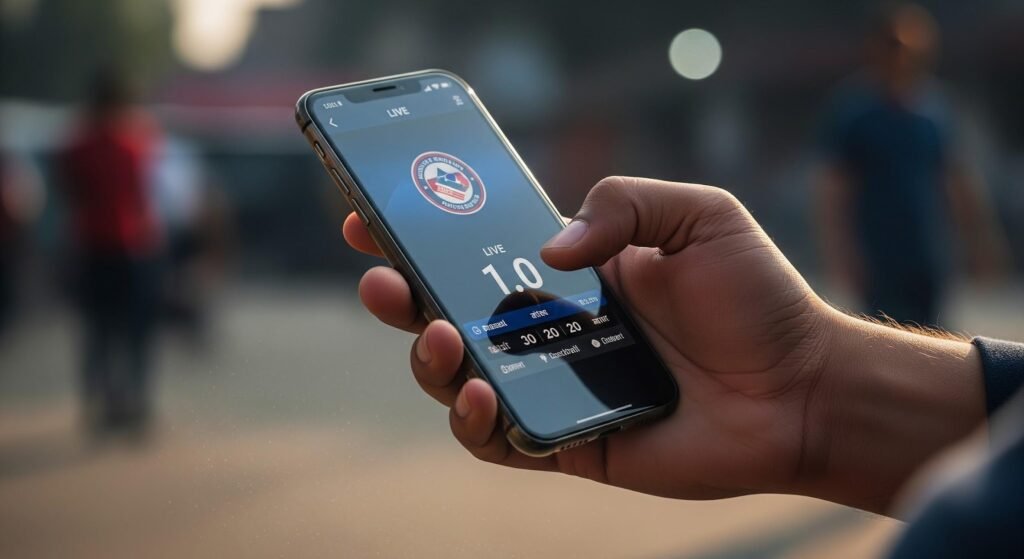
Nepal sports fans in 2026 do not switch on only when the national cricket team plays or when football returns to Dasharath Stadium. They stay connected year-round, in fragments: a score alert before work, a cricket reel during lunch, a football argument in a Facebook group, a late-night live stream from another time zone. The match is no longer a two-hour event. It is a rolling conversation.
The digital base is already large enough to reshape sports habits. DataReportal’s Digital 2026 report counted 16.6 million internet users in Nepal at the end of 2025, with 14.8 million social media user identities and 32.4 million mobile connections. For a country where geography still complicates travel and living attendance, that mobile layer matters. It keeps the fan close to the game even when the stadium is far away.
Football Still Starts the Argument
Football Nepal 2026 carries a strange mix of frustration and loyalty. Domestic football has suffered from calendar gaps, club complaints, and uneven visibility, yet fans keep returning to it because football still feels socially immediate. It belongs to neighborhoods, school grounds, turf pitches, and local pride.
The National League 2082 began in January 2026, following a long domestic gap, giving supporters a real competition to follow again. That mattered because football culture needs repetition. A league table builds tension only when fans trust that next week’s match will actually arrive.
But the audience has changed during the interruption. Fans now expect team sheets, score updates, short highlights, and post-match reaction almost instantly. If official channels move slowly, unofficial pages take over the story.
Cricket Has Built the Stronger Year-Round Rhythm
Cricket Nepal fans have a clearer international calendar to follow. ICC Cricket World Cup League 2 provides the national team with a long qualification pathway, and Nepal’s 2026 fixtures at Kirtipur place real stakes on home ODIs against teams such as Oman, UAE, Scotland, and USA. These matches turn every dropped catch and middle-over collapse into something bigger than a bad afternoon.
That structure creates year-round engagement. Fans track tables, squad balance, strike rates, bowling economy, and net run rate. They do not need a final to care. The qualification ladder keeps tension alive.
Kirtipur adds the emotional layer. Even short clips from the ground carry noise, flags, and the feeling of a crowd standing too close to the action. Cricket travels well online because every ball creates a new post.
Mobile Apps Keep the Season Open
Live sports Nepal are now available on mobile devices. Fans no longer consume sport in neat blocks. They check scores while commuting, watch highlights between tasks, read comments after dinner, and return to full match coverage only when the stakes demand it.
Betting apps sit inside that same mobile habit, but the better users approach them as information tools first. A fan tracking cricket odds needs pitch reports, bowling matchups, and required-rate movement; a football bettor needs lineups, injuries, match tempo, and price changes. Searches around legal betting app in Nepal tend to focus on access, market coverage, app reliability, and compliance language rather than simple slogans. The practical value is clearer when users can compare live markets with actual match conditions. Bankroll discipline still determines whether the activity stays under control.
That last point matters. Digital speed can make every moment feel urgent. Sport rarely rewards that. Good fans wait. Good bettors wait longer.
Social Media Has Become the New Stand
Nepal’s loudest sports stands are often not inside stadiums. It is in Facebook comments, YouTube chats, Messenger groups, Instagram reels, and short-form edits. DataReportal reported that social media user identities in Nepal equaled 50 percent of the population in late 2025, which explains why fan conversation now moves faster than traditional sports coverage.
This creates both value and distortion. A young footballer can gain recognition from one good clip. A cricketer can be judged harshly for one over without the full match context. A referee’s decision can become national entertainment before the official report appears.
The best fan communities resist that laziness. They bring scorecards, fixture details, player roles, and tactical context into the argument. They still shout. They just shout with better evidence.
Communities Follow Different Sports in Different Ways
Nepal sports fans do not behave the same way across football and cricket. Cricket audiences tend to track data more heavily because the sport produces measurable events every few seconds. Football audiences tend to organize around identity, clubs, neighborhoods, and national-team emotion. This difference matters for publishers and platforms. A cricket preview without numbers feels weak. A football story without people feels empty.
Online Platforms Turn Casual Fans Into Daily Users
Sports platforms win attention when they solve small, repetitive problems. They remind users when Nepal plays. They show whether a domestic football match has started. They send wicket alerts. They keep highlights short enough for mobile data and clear enough for sharing.
During a busy sports week, Melbet online can fit into users’ daily routine, allowing them to follow odds across cricket, football, and other live events from a single screen. Its role is strongest when the platform gives structure: fixtures, live markets, statistics, and quick movement between sports. That matters for fans who already jump between score apps, streams, and group chats. A crowded screen needs clean order, not more noise.
Online sports behavior is now less about one destination and more about a stack of tools. One app streams. One app scores. One group argues. One platform tracks markets. The fan moves between them without thinking.
The Year-Round Fan Is Harder to Fool
The modern Nepali sports fan sees more, compares more, and forgives less. Bad streams get mocked. Late updates get ignored. Lazy articles disappear. Fake transfer rumors still spread, but fans challenge them faster than before.
This is good for the sports ecosystem. It raises the standard. Clubs must communicate better. Federations must publish cleaner information. Media outlets must stop writing as if the audience is passive.
The next phase of Nepal sports fan culture will belong to communities that combine emotion with detail. The loudest page will not always win. The most useful one might.